


Learning Journey as a GPS
A route the system proposes and the learner can ignore
Vinitra Swamy, Scholé Engineering Team
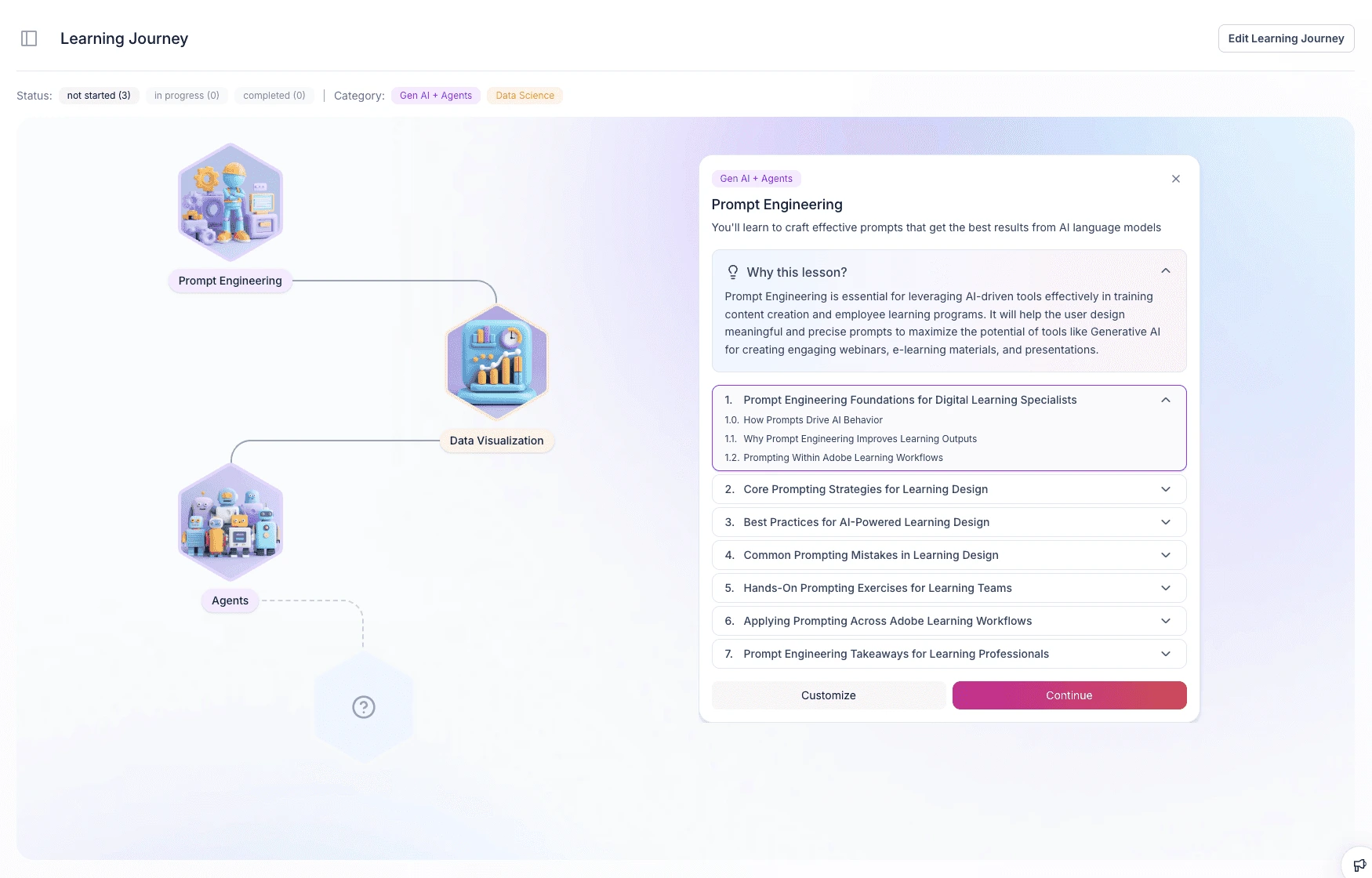
A GPS is useful because it proposes a route while assuming you might ignore it. You can take a detour, you can stop early, you can even change your destination. The system adapts, but you stay in control. That is the mental model we use for learning journeys at Scholé.
Early on, we optimized our curriculum curation heavily for flexibility. We recommended a few areas to start with based on who the learner is (their job, tools, tasks) and proposed initial lesson outlines for each area, but everything was in the control of the user. You could start anywhere. You could ignore the suggestions. You could create your own lesson on anything relevant to your work. This respected the learner’s agency, and it was our initial hypothesis of what a truly powerful AI-native learning engine could look like by putting full control in the hands of the users.
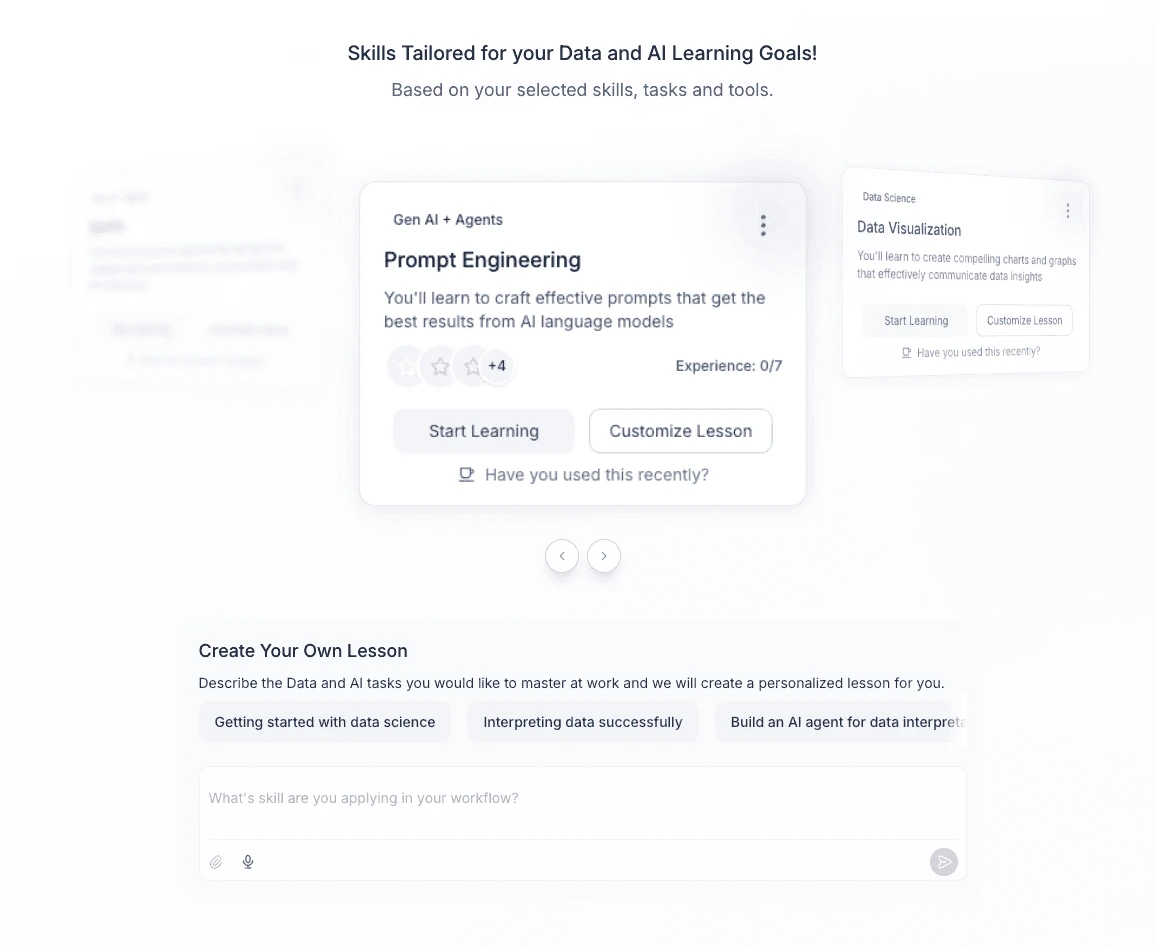
But we learned something quickly and directly from user feedback: complete freedom actually shifts planning work onto the learner.
When everything is possible, learners have to decide what matters next, how topics connect, and when to move on. The system adapts inside lessons, but the overall roadmap has to live in the learner’s head. For many learners, this meant more navigation and more confusion, especially compared to a traditional “watch videos and answer questions” LMS (learning management system) with far fewer moving parts.
Our new learning journey design responds to the structure vs. user flexibility tradeoff.
We now generate, for each user, an explicit journey with ordering and dependencies. The system proposes what to do next based on prior activity, completion, struggle, revisits, and exploration. However, unlike Duolingo’s learning path, this proposal is 1) personalized for each user, and 2) not enforced. Learners can jump anywhere in the journey, as before, a little like Mario exploring worlds from our video-game era. The difference here is that there exists one primary learning journey that is continuously updated, and can be filtered into smaller learning journeys depending on the learner's interest.
Crucially, learners can completely reorient their learning journey by chatting with Olé*, our metacognitive curriculum orchestrator (also known as our platform's primary tutor). You can ask why something is next, request a different focus, or move faster or slower. The system makes suggestions as you learn towards how your learning journey should change based on your learning strengths and weaknesses. You can decide to accept or reject these suggestions, allowing you to remain in the driver’s seat.
This shift reflects a broader design principle we care about. The real challenge is not choosing between freedom and structure. It is deciding who carries the cognitive load. Our view is that AI-native learning systems should do more of the planning**, while keeping that plan personalized, revisable, and user-controlled, so learners can spend their effort learning.
Welcome to the Scholé engineering blog. We’ll be sharing the tradeoffs and lessons behind building systems like this, where guidance and agency coexist. Stay tuned!
*We've named our learning tutor Olé for the Spanish interjection analogous to "bravo!" used to cheer on or encourage a performance, originally used in the context of bull-fighting or flamenco dancing.
**This derives from theories in self-regulated learning and the importance of human-in-the-loop AI systems for building trust.